How does someone become an expert
in therapeutic knitting?
In my case, completely by accident!
Unlike most knitters who learn in childhood, I came to knitting as an adult.
Fascinated by the euphoric feelings it produced, I started researching knitting’s therapeutic power and the ever-mounting body of evidence supporting its cognitive, social, emotional and physical benefits. I immersed myself in this unusual topic and after 3 years of research, an unexpected career was born.
READ MORE ABOUT KAREN'S WORK
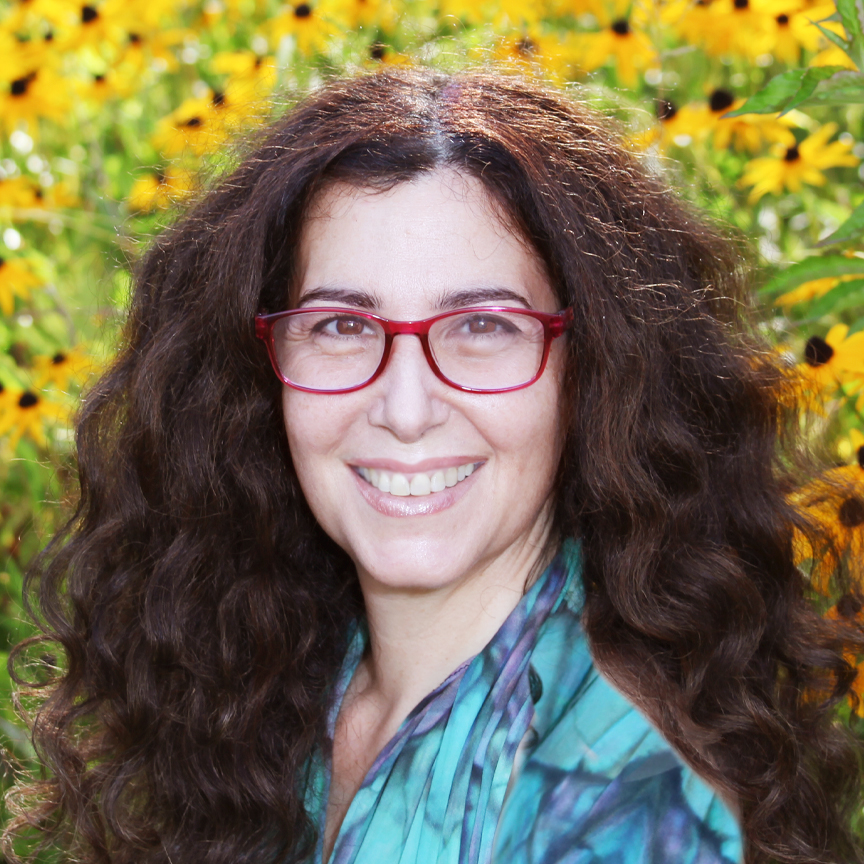
Karen Zila Hayes is a Life Coach, Sensory Wellness Specialist and the Creator of S.A.M. (Sensory Alignment Method). She is also one of Canada’s leading experts on Knitting Therapy.
In her work as a teacher and wellness coach, Karen had always promoted the value of creative expression. When she started incorporating knitting into her work, she began to see some very exciting and unexpected results, in her clients and students, not only in terms of creative empowerment, but also in terms of overall health. Intrigued by these results, Karen created KNIT~MAGIC.
The result is an innovative approach to healing, wellness and spiritual growth, all facilitated by the powerfully grounding effects of this amazing super-craft.
Just as a golf pro’s job is to assess a client’s swing and make that swing both more efficient and safe for the body, Karen’s special skill set allows her to analyze and correct postural and mechanical flaws in a person’s knitting technique.
Her mission is not only to educate people about the amazing benefits of knitting but also to redefine the way knitting is taught. Karen’s trailblazing ’Safe Knitting’ Program is the first of its kind.
THE ACCIDENTAL KNITTER
Years ago I was happily employed as a wellness coach and teacher. I had no desire to ever become a knitter, but one day, my husband asked me if we had anything made of pure wool. When I asked him what was behind this rather strange request, he explained that a new meditation technique he was trying recommended sitting on wool. Since I had studied art in college, I felt pretty sure I could knit a simple square, so I asked my friend, an avid knitter, if she could show me the basics.
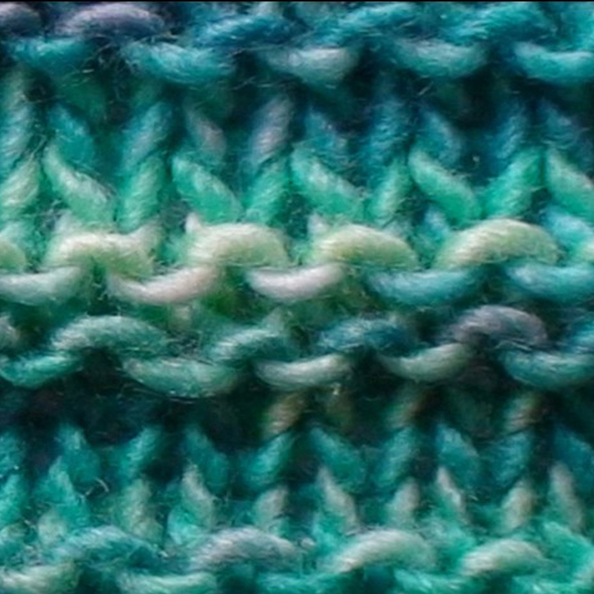
She lent me a pair of needles (I didn’t think I’d be knitting long enough to want my own pair) and said that if I didn’t care about the colour of yarn, I could use some of her remnants. There was enough cream coloured yard for a border on both ends, and for the middle I chose green.
I picked up the knit stitch pretty quickly, and figured I’d be done with the project (and knitting in general) inside of a week. But then, a strange thing happened. I found there was something highly pleasurable about the process and, about ten rows into the project, I was hooked.
When I finally went to bed that night, I couldn’t stop thinking about how weirdly wonderful I felt while knitting. I woke up the next morning and the first thing I wanted to do was to knit again. I quickly finished the square, but by this time I’d already bought some new yarn and had begun a scarf.
About a week into my new passion, I decided to see if I could find any information that could explain why knitting was making me feel this way. I found it in spades! Turns out, in addition to a host of other amazing benefits, knitting releases endorphins and actually changes our brainwave patterns!
I read about studies in which knitting helped those with Alzheimer’s, cancer, ADHD, Parkinson’s, chronic pain and more. I read about studies in which students were allowed to knit during class and it improved their grades. There was so much information coming to light, but it was still relatively unkown. I realized I wanted to play a part in spreading this message. If knitting could make a healthy person like myself feel a new kind of blissful euphoria AND help those dealing with serious health issues, how could I not spread the word?
And that’s the story of how a simple square started the amazing journey to my current role as an expert in therapeutic knitting. But there’s one other amazing thing that happened in this story: There were about six colours I had to choose from in the batch of remnants my friend offered me. At the time, I thought the cream and green I chose were arbitrary choices and I remember thinking that the green was a rather unusual, uncommon shade.
A few weeks later, I was looking through my linen chest and found an intricately knitted square with a lotus design and lace work that my great-grandmother had made. I had received it a few years before in a batch of my grandmother’s clothes, barely given it a second look, and had forgotten it even existed. It was the exact same size as the one I’d made, in the excat same unusual green and cream!
How does someone become an expert in therapeutic knitting?
In my case,
completely by accident!
Unlike most knitters who learn in childhood,
I came to knitting as an adult.
Fascinated by the euphoric feelings it produced, I started researching knitting’s therapeutic power and the ever-mounting body of evidence supporting its cognitive, social, emotional and physical benefits. I immersed myself in this unusual topic and after 3 years of research, an unexpected career was born.
MORE ON KAREN'S WORK
Karen Zila Hayes is a Life Coach, Sensory Wellness Specialist and the Creator of S.A.M. (Sensory Alignment Method). She is also one of Canada’s leading experts on Knitting Therapy.
In her work as a teacher and wellness coach, Karen had always promoted the value of creative expression. When she started incorporating knitting into her work, she began to see some very exciting and unexpected results, in her clients and students, not only in terms of creative empowerment, but also in terms of overall health. Intrigued by these results, Karen created KNIT~MAGIC.
The result is an innovative approach to healing, wellness and spiritual growth, all facilitated by the powerfully grounding effects of this amazing super-craft.
Just as a golf pro’s job is to assess a client’s swing and make that swing both more efficient and safe for the body, Karen’s special skill set allows her to analyze and correct postural and mechanical flaws in a person’s knitting technique.
Her mission is not only to educate people about the amazing benefits of knitting but also to redefine the way knitting is taught. Karen’s trailblazing ’Safe Knitting’ Program is the first of its kind.
THE ACCIDENTAL KNITTER
Years ago I was happily employed as a wellness coach and teacher. I had no desire to ever become a knitter, but one day, my husband asked me if we had anything made of pure wool. When I asked him what was behind this rather strange request, he explained that a new meditation technique he was trying recommended sitting on wool. Since I had studied art in college, I felt pretty sure I could knit a simple square, so I asked my friend, an avid knitter, if she could show me the basics.
She lent me a pair of needles (I didn’t think I’d be knitting long enough to want my own pair) and said that if I didn’t care about the colour of yarn, I could use some of her remnants. There was enough cream coloured yard for a border on both ends, and for the middle I chose green.
I picked up the knit stitch pretty quickly, and figured I’d be done with the project (and knitting in general) inside of a week. But then, a strange thing happened. I found there was something highly pleasurable about the process and, about ten rows into the project, I was hooked.
When I finally went to bed that night, I couldn’t stop thinking about how weirdly wonderful I felt while knitting. I woke up the next morning and the first thing I wanted to do was to knit again. I quickly finished the square, but by this time I’d already bought some new yarn and had begun a scarf.
About a week into my new passion, I decided to see if I could find any information that could explain why knitting was making me feel this way. I found it in spades! Turns out, in addition to a host of other amazing benefits, knitting releases endorphins and actually changes our brainwave patterns!
I read about studies in which knitting helped those with Alzheimer’s, cancer, ADHD, Parkinson’s, chronic pain and more. I read about studies in which students were allowed to knit during class and it improved their grades. There was so much information coming to light, but it was still relatively unkown. I realized I wanted to play a part in spreading this message. If knitting could make a healthy person like myself feel a new kind of blissful euphoria AND help those dealing with serious health issues, how could I not spread the word?
And that’s the story of how a simple square started the amazing journey to my current role as an expert in therapeutic knitting. But there’s one other amazing thing that happened in this story: There were about six colours I had to choose from in the batch of remnants my friend offered me. At the time, I thought the cream and green I chose were arbitrary choices and I remember thinking that the green was a rather unusual, uncommon shade.
A few weeks later, I was looking through my linen chest and found an intricately knitted square with a lotus design and lace work that my great-grandmother had made. I had received it a few years before in a batch of my grandmother’s clothes, barely given it a second look, and had forgotten it even existed. It was the exact same size as the one I’d made, in the excat same unusual green and cream!